top of page


aims to spread awareness on circulating fake news
Fake news is false or misleading information presented as news. Fake news often has the aim of damaging the reputation of a person or entity, or making money through advertising revenue. Although false news has always been spread throughout history, the term "fake news" was first used in the 1890s when sensational reports in newspapers were common. However, the term does not have a fixed definition, and has been applied more broadly to include any type of false information, including unintentional and unconscious mechanisms, and also by high-profile individuals to apply to any news unfavourable to their personal perspectives.
Furthermore, disinformation is an insidious type that involves spreading false information with harmful intent, and is sometimes generated and propagated by hostile foreign actors, particularly during elections. In some definitions, fake news includes satirical articles misinterpreted as genuine, and articles that employ sensationalist or clickbait headlines that are not supported in the text. Because of this diversity of types of false news, researchers are beginning to favor information disorder as a more neutral and informative term.
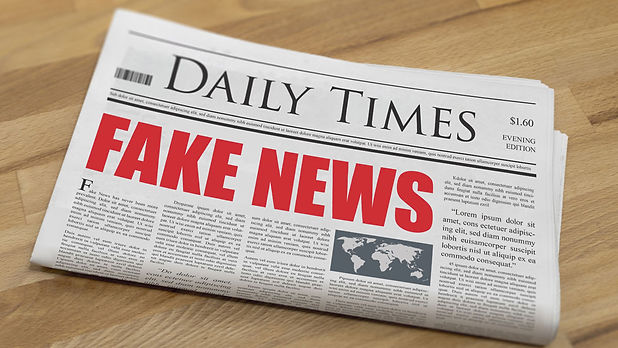

What is Fake News?

What is Fact-Check?
Fact-checking is a process that seeks to verify sometimes factual information, in order to promote the veracity and correctness of reporting. Fact-checking can be conducted before (ante hoc) or after (post hoc) the text is published or otherwise disseminated. Internal fact-checking is such checking done in-house by the publisher; when the text is analyzed by a third party, the process is called external fact-checking.
Ante hoc fact-checking aims to identify errors so that the text can be corrected before dissemination, or perhaps rejected.
Post hoc fact-checking is most often followed by a written report of inaccuracies, sometimes with a visual metric provided by the checking organization (e.g., Pinocchios from The Washington Post Fact Checker, or TRUTH-O-METER ratings from PolitiFact). Several organizations are devoted to post hoc fact-checking: examples include FactCheck.org and PolitiFact in the US, and Full Fact in the UK.

"BEWARE OF FAKE KNOWLEDGE; IT IS MORE DANGEROUS THAN IGNORANCE"
George Bernard Shaw
Concerns
If you have any concerns.
bottom of page